
Could GLP-1 Medications Change the Way We Treat Alcohol Use Disorder?
Emerging research into semaglutide and alcohol cravings is opening another chapter in how we understand—and potentially treat—our relationship with alcohol.
You probably know GLP-1 medications by names like Ozempic® and Wegovy®. Originally developed for diabetes and now widely used for weight management, these medications have transformed conversations about appetite and cravings.
But researchers have noticed something else: some people taking GLP-1 medications report changes in their desire to drink alcohol.
That observation has sparked growing research into whether medications such as semaglutide could someday become another tool for treating Alcohol Use Disorder (AUD).
The VA Is Putting GLP-1s to the Test
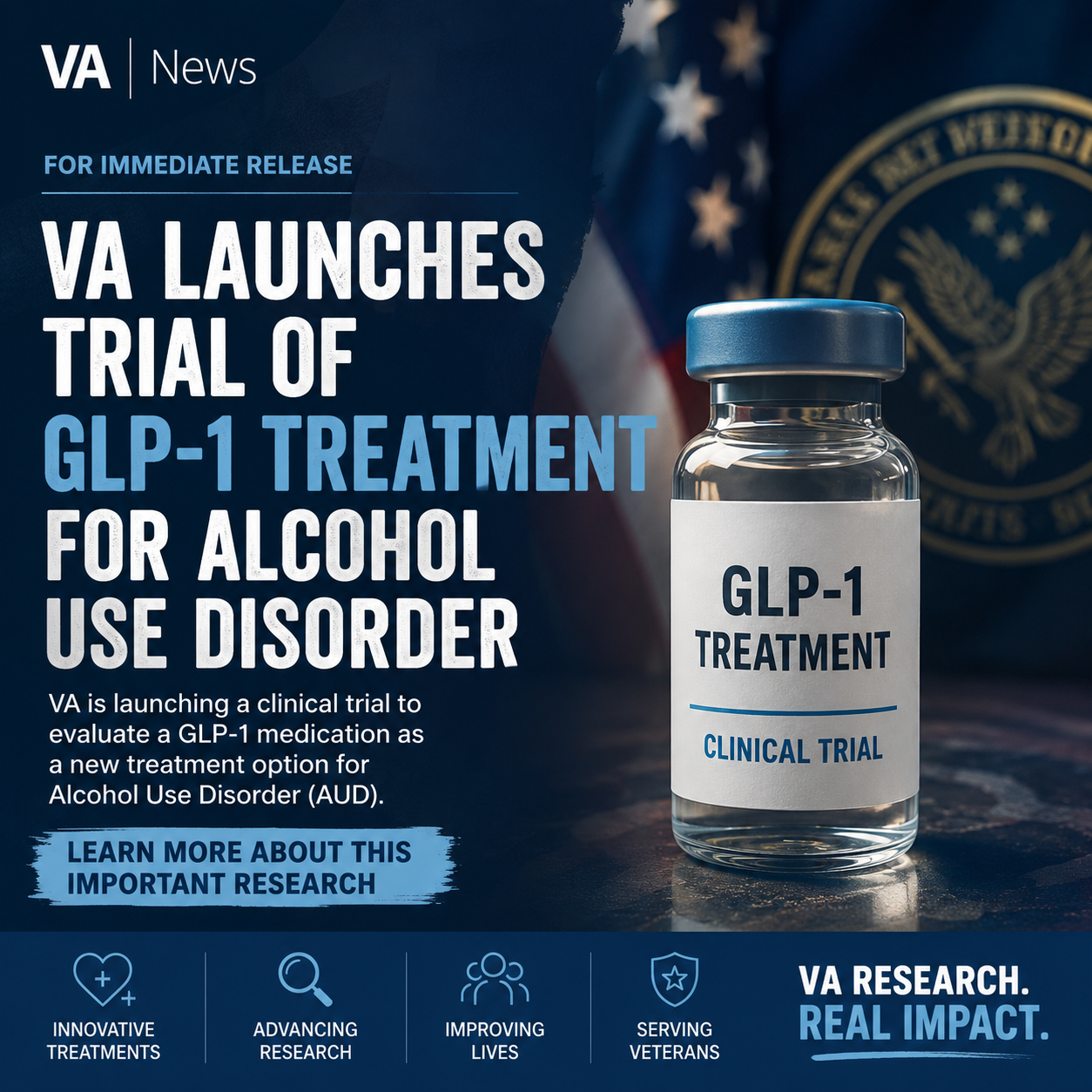
In July 2026, the U.S. Department of Veterans Affairs announced a major clinical trial evaluating semaglutide as a potential treatment for AUD.
Read the VA announcement about the GLP-1 and Alcohol Use Disorder trial.
The study plans to enroll more than 600 Veterans at 18 VA medical centers. Participants with moderate or severe AUD will receive either weekly semaglutide injections or a placebo, with researchers measuring changes in alcohol consumption, health, and quality of life.
Alcohol use itself—not weight loss—is the focus of the study.
Why Might a Weight-Loss Drug Affect Alcohol?
GLP-1 medications affect systems involved in appetite, satiety, and reward. Researchers are investigating whether those effects might extend beyond food to influence alcohol cravings, consumption, or the rewarding effects associated with drinking.
Earlier research has provided promising signals, including a randomized human trial examining semaglutide and alcohol consumption. But early findings and observational studies aren't enough to establish GLP-1 medications as an effective treatment.
That's why larger clinical trials like the VA study matter.
More Options for Treating Alcohol Use Disorder
The research is also part of a larger shift toward more individualized approaches to AUD.
Treatment doesn't have to mean one particular program or pathway. Today, people may use counseling, primary care, addiction medicine, peer-support communities, medication, or a combination of approaches.
There are currently three FDA-approved medications for AUD: naltrexone, acamprosate, and disulfiram.
Learn more about professional support and medications from NIAAA.
Researchers continue to investigate additional medications because AUD affects people differently—and not everyone responds to the same treatment.
Promising Research Isn't Proven Treatment
There's an important distinction to make:
Semaglutide and other GLP-1 medications are not currently FDA-approved to treat Alcohol Use Disorder.
The VA cautions people against self-medicating with GLP-1 medications or replacing established AUD treatments with them.
The early evidence is promising enough to study. That's different from having enough evidence to call GLP-1 medications a proven treatment for AUD.
The Bigger Trend: More Paths Forward
Perhaps the most interesting part of the GLP-1 research isn't one particular medication. It's what the research represents.
Our understanding of alcohol use, craving, and recovery continues to evolve. For one person, change might mean abstinence and peer support. For another, it might include medication and counseling. Someone else may simply want to drink less, track their drinking, take a month off, or become more intentional about when and why they drink.
Different needs require different tools.
That's also where Zero Proof, For You fits in.
We're not a treatment program. We're working to make zero-proof choices easier to find, normalize drinking less, connect people with credible resources, and reduce the stigma around asking questions about alcohol.
The VA's GLP-1 trial doesn't tell us that we've discovered the next treatment for Alcohol Use Disorder.
It tells us we're still discovering what's possible.
And that's worth paying attention to.
More information. More choices. Less stigma. Zero Proof, For You.
Zero Proof, For You provides educational information and community resources, not medical advice, diagnosis, or treatment. Always talk with a qualified healthcare professional about your individual health, medications, alcohol use, and treatment options.